Effectiveness and safety of intravenous lipid emulsion in women with recurrent pregnancy loss or recurrent implantation failure: a systematic review and meta-analysis
This is an Open Access article distributed under the terms of the Creative Commons Attribution Non-Commercial License (http://creativecommons.org/licenses/by-nc/4.0/) which permits unrestricted non-commercial use, distribution, and reproduction in any medium, provided the original work is properly cited.
Intralipid, an intravenous lipid emulsion, is widely used for women with recurrent pregnancy loss (RPL) or recurrent implantation failure (RIF), despite limited evidence. This systematic review evaluated the effectiveness and safety of intralipid in this population. We searched seven electronic databases from inception to April 14, 2025. Randomized controlled trials (RCTs) and non-randomized comparative studies (NRCSs) were included for effectiveness analysis; case series and reports for safety. Two reviewers independently screened and extracted data. Risk of bias was assessed using RoB 2.0 and RoBANS 2.0. Meta-analyses used a random-effects model (risk ratios [RR] with 95% confidence intervals [CI]). Evidence certainty was assessed using the Grading of Recommendations Assessment, Development and Evaluation (GRADE) approach. Seventeen studies were included (8 effectiveness, 11 safety). Pooled RCT data showed intralipid significantly improved clinical pregnancy rate vs. no treatment (RR 2.31, 95% CI 1.42–3.74; I² = 0%; GRADE certainty: low); this effect was not observed in the pooled NRCS data for live birth rate or clinical pregnancy rate, and one large NRCS reported a significantly higher miscarriage rate in the intralipid group (RR 1.12, 95% CI 1.04–1.20). No significant differences were observed vs. intravenous immunoglobulin (IVIG) or steroids. Serious adverse events were rare. GRADE certainty was very low to low across all outcomes. Current evidence does not support the routine use of intralipid in women with RPL or RIF. While pooled RCT data suggest a potential benefit in clinical pregnancy rate, evidence certainty is low, and this benefit was not observed in the pooled NRCS data. Adequately powered RCTs with standardized protocols and live birth rate as the primary endpoint are needed.
Infertility is a major and growing reproductive health concern worldwide. In South Korea, where advanced maternal age and ultra-low birth rates are increasingly prevalent, infertility carries particular public health significance. According to data from the Health Insurance Review and Assessment Service (HIRA), the number of patients diagnosed with infertility in South Korea reached approximately 289,000 in 2024, representing a 1.3-fold increase from 228,000 in 2020 [1]. The number of individuals undergoing assisted reproductive technology (ART) procedures similarly increased 1.2-fold, from 130,000 in 2020 to 161,000 in 2024. Repeated ART failure imposes substantial psychological and financial burdens on affected women and their families, prompting exploration of alternative treatment strategies.
Immunological factors have been implicated in implantation failure and pregnancy loss, and various immunomodulatory therapies have been introduced into clinical practice. Among these, Intralipid, an intravenous lipid emulsion originally approved for total parenteral nutrition (TPN) and holds no regulatory indication for infertility treatment or immunomodulation. Nevertheless, several basic and observational studies have reported that intralipid may inhibit natural killer (NK) cell cytotoxicity [2,3], reduce Th1/Th2 immune activation [4,5], and improve the implantation environment. However, most of these studies were limited by small sample sizes, lack of prospective controls, and inconsistent diagnostic criteria. High-quality evidence confirming the effectiveness of intralipid in infertile patients remains insufficient.
Kumar et al. noted that intralipid may be considered in certain immunological high-risk groups but is not supported by sufficient evidence to be recommended as standard care for women with recurrent implantation failure (RIF) or recurrent pregnancy loss (RPL) [6]. The Human Fertilisation and Embryology Authority (HFEA) classifies intralipid and other immunomodulatory treatments as treatments with "insufficient evidence and potential harm" and does not recommend their use for fertility treatment [7]. Despite concerns raised by international regulatory and professional bodies regarding the limited evidence base for intralipid in fertility treatment, intralipid infusions are widely administered in South Korea in a non-reimbursed setting, including repeated infusions justified solely by marginal elevations in NK cell activity, raising concerns about the clinical expansion of insufficiently evidenced therapies.
This systematic review was conducted to generate evidence on the clinical effectiveness and safety of intralipid infusion in women with RPL, RIF and repeated IVF failure, with the aim of supporting appropriate and rational use of intralipid in infertility treatment.
Methods
This systematic review and meta-analysis was prospectively registered in PROSPERO (CRD420251039275). The review followed the Preferred Reporting Items for Systematic Reviews and Meta-Analyses (PRISMA) 2020 guidelines [8].
Eligibility criteria
Eligible studies were those enrolling women with RPL or RIF (including studies defining RIF as two or more failed IVF cycles) as the target population, investigating intralipid infusion as the intervention for pregnancy purposes, and comparing outcomes with placebo, no treatment, or other immunomodulatory treatments (including IVIG or steroids). For the purposes of this review, repeated IVF failure was considered to overlap clinically with RPL and RIF and was therefore included within the eligible population. Eligible study designs for effectiveness analysis included randomized controlled trials (RCTs) and non-randomized comparative studies (NRCSs) (cohort and case–control studies) with at least 10 participants per arm. Studies reporting only safety outcomes (case series and case reports) were also included in the safety analysis. Exclusion criteria included animal studies, pre-clinical studies, non-original research (systematic reviews, narrative reviews, guidelines, editorials, opinions), grey literature, theses, and retracted publications. Conference abstracts were excluded from the effectiveness analysis because of insufficient methodological and outcome information but were eligible for the safety analysis when they provided identifiable adverse-event data.
Outcomes
The primary outcomes were live birth rate and clinical pregnancy rate. Clinical pregnancy was defined as the presence of a gestational sac with fetal cardiac activity confirmed by ultrasonography; where studies used alternative definitions, reported values were extracted as documented and noted accordingly. The secondary outcome was miscarriage rate, defined as pregnancy loss prior to 20 weeks of gestation. Safety outcomes included maternal adverse reactions, obstetric complications, and neonatal outcomes such as congenital anomalies.
Literature search
We searched five major international electronic databases—Ovid-MEDLINE, Ovid-EMBASE, Cochrane Central Register of Controlled Trials (CENTRAL), Web of Science, and Scopus—as well as two Korean databases, KoreaMed and KMbase. There were no restrictions on publication year, and the final search date was April 14, 2025. Search strategies combined Medical Subject Headings (MeSH) terms and free-text terms related to infertility, ART, and intralipid, covering the population (P) and intervention (I) components. Detailed search strategies are provided in the Supplementary Methods S1.
Study selection and data extraction
Two reviewers independently screened titles and abstracts, then full texts, according to the predefined eligibility criteria. Disagreements were resolved by discussion with a third reviewer. Data extraction covered study characteristics (country, year, design, participating institutions, study period), participant characteristics (inclusion/exclusion criteria, number of participants, age, clinical group), intervention characteristics (intralipid formulation, dose, timing, frequency, concurrent treatments, prior NK cell testing), and outcome data (outcome measure, measurement method, reported values, summary statistics, timing of assessment). For studies reporting both cycle-level and woman-level data, woman-level data were preferentially extracted for the intralipid versus no-treatment comparison to minimize unit-of-analysis concerns arising from non-independent repeated cycles. For example, although Mrosk et al. reported most outcomes at the treatment-cycle level, the intralipid versus no-treatment comparison was based on a woman-level subgroup (patients with elevated uterine natural killer cell counts) and was extracted accordingly.
Risk of bias assessment
Risk of bias was assessed independently by two reviewers, with discrepancies resolved by a third reviewer. RCTs were assessed using the Cochrane Risk of Bias 2.0 (RoB 2.0) tool across five domains. NRCSs were assessed using the RoBANS ver 2.0 tool. Risk of bias assessment was not performed for case series and case reports included for safety analyses only.
Data synthesis and statistical analysis
When data could be pooled quantitatively, meta-analysis was performed; otherwise, a qualitative synthesis was conducted. Given anticipated clinical heterogeneity across studies, a random-effects model was applied throughout. For dichotomous outcomes, the Mantel-Haenszel method was used to calculate RR and 95% CI. For continuous outcomes, weighted mean difference (WMD) or standardized mean difference (SMD) with 95% CI was used depending on whether outcomes were measured on the same or different scales. Heterogeneity was assessed visually using forest plots and statistically using Cochrane’s Q statistic (P < 0.10) and I² statistics (≥ 50%) [9]. Subgroup analyses were prespecified by patient group (RIF or RPL), sample size, and intervention dose. Sensitivity analyses were conducted according to patient group (RIF only), NK cell testing status, risk of bias level, and whether adjusted estimates were reported. All meta-analyses were performed using RevMan 5.4. Statistical significance was set at P < 0.05. Funnel plots and Egger's test for small-study effects were planned to assess reporting bias when at least 10 studies were available for a given meta-analysis. As no synthesis included 10 or more studies, these assessments were not performed.
Certainty of evidence
The certainty of evidence was assessed for direct intervention effect outcomes using the GRADE approach [10], considering risk of bias, inconsistency, indirectness, imprecision, and publication bias.
Results
Literature search and study selection
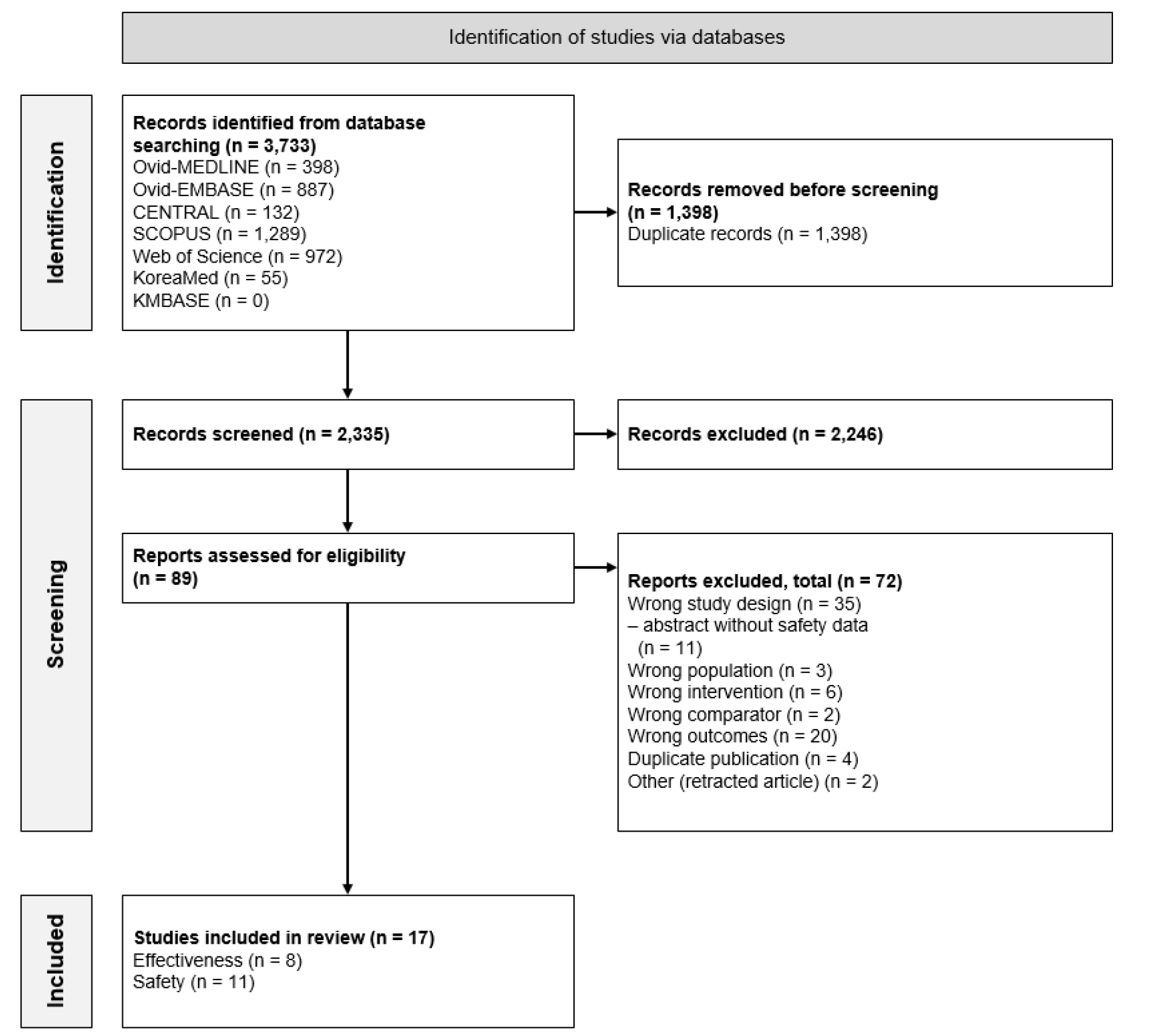
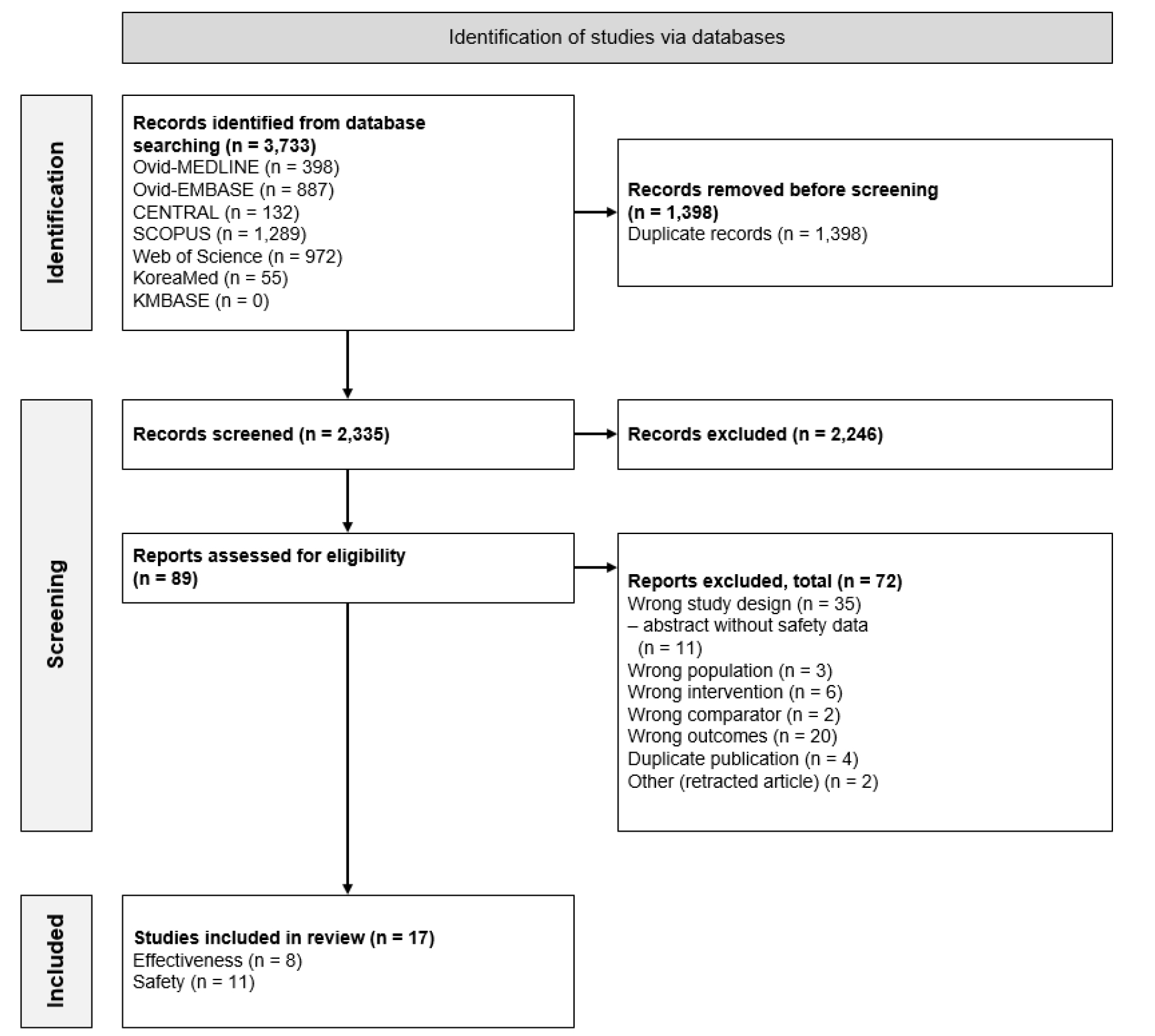
A total of 3,733 records were identified through searches of seven electronic databases. After removal of 1,398 duplicates, 2,335 records underwent title and abstract screening, of which 2,246 were excluded. The remaining 89 reports were retrieved for full-text assessment, and 17 studies were ultimately included: 8 for effectiveness analysis (3 RCTs, 5 NRCSs) and 11 for safety analysis (4 RCTs, 2 NRCSs, 4 case series, 1 case report). The study selection process is shown in the PRISMA flow diagram (Fig. 1), and reasons for exclusion of full-text–reviewed studies are presented in Supplementary Table S1.
Characteristics of included studies for effectiveness analysis
The three RCTs for effectiveness analysis were published in 2016 and 2022, conducted in Russia, Iran, and China [11-13], and enrolled women with RIF (2 studies) or women undergoing IVF (1 study). Two RCTs compared intralipid with no treatment/placebo [12,13], and one compared intralipid with IVIG [11]. The five NRCSs [14-18] were all retrospective cohort studies, published between 2018 and 2024, and conducted in the United Kingdom (n = 1), France (n = 2), Germany (n = 1), and the United States (n = 1). Target populations included RIF (2 studies), a mix of RIF and RPL or IVF recipients (3 studies). Comparators were no treatment [15,17,18], prednisolone [14], and both no treatment and steroids [16].
Across studies, 20% intralipid was used in most studies. Doses ranged from 100 to 250 mL per infusion. The number of infusions ranged from 1 to 5, with varying timing relative to embryo transfer. Characteristics of included studies and details of intervention are summarized in Table 1.
Risk of bias assessment
All three RCTs reported adequate randomization but failed to report allocation concealment, resulting in “some concerns” in the randomization process domain. Patient blinding was absent or unclear, and deviation from intended intervention was rated as “some concerns” across all three. One RCT [11] was rated “high risk” overall due to 40% loss to follow-up for live birth outcomes. The remaining two RCTs [12,13] were rated “some concerns” overall (Supplementary Figure S1).
The five NRSs were assessed using the RoBANS ver 2.0 tool across eight domains. The main sources of bias were comparability of groups, selection of study participants, and confounding variables. Martini et al. was rated "high risk" in both the comparability and confounding domains, as it used a historical RCT control group with differing eligibility criteria and baseline characteristics, and applied only unadjusted statistical tests without controlling for confounders [14]. Most remaining studies were rated "unclear" for participant selection due to their retrospective designs, in which outcomes were already known at enrollment. Blinding of outcome assessors and selective outcome reporting were rated "low risk" across all studies, as pregnancy outcomes are objectively ascertained and primary outcomes were consistently reported (Supplementary Figure S2).
Effectiveness: intralipid versus no treatment
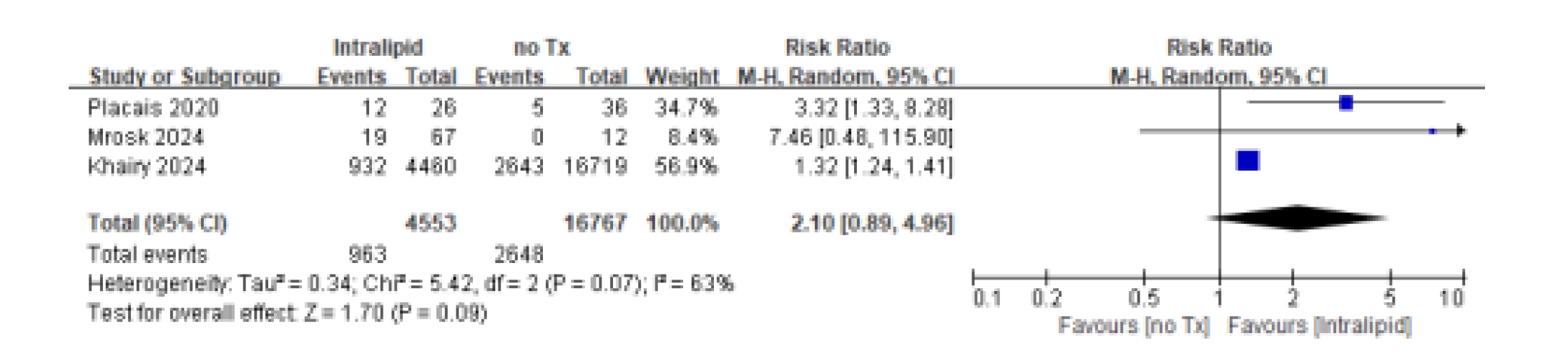
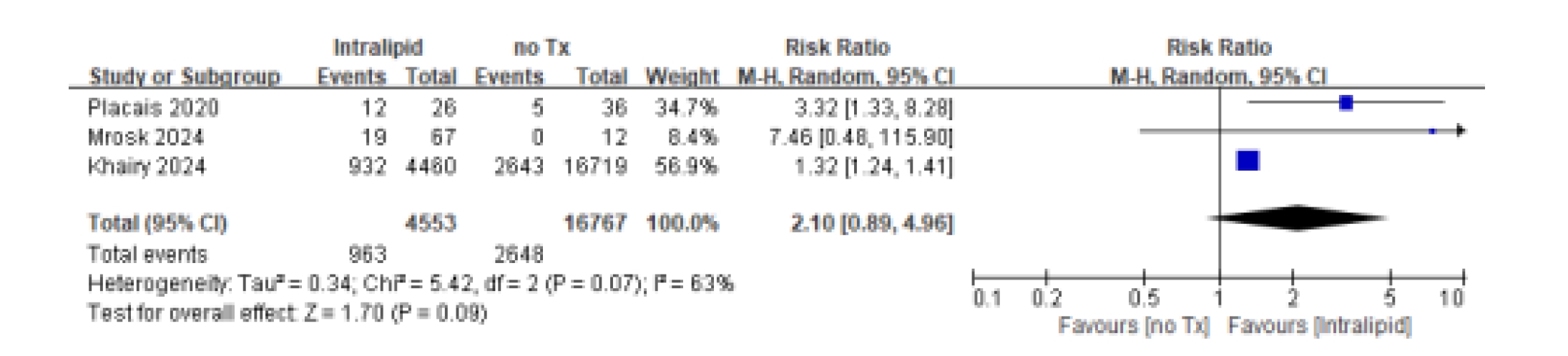
No RCT reported live birth rate. Among three NRCSs (n = 21,320), there was no statistically significant difference in live birth rate between intralipid and no-treatment groups (RR 2.10, 95% CI 0.89–4.96; I² = 63%) (Fig. 2).
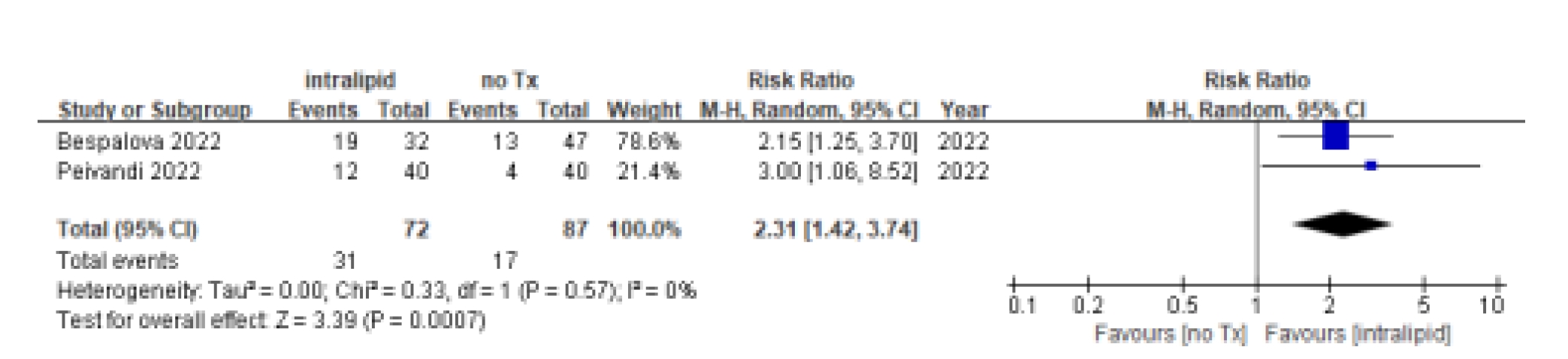
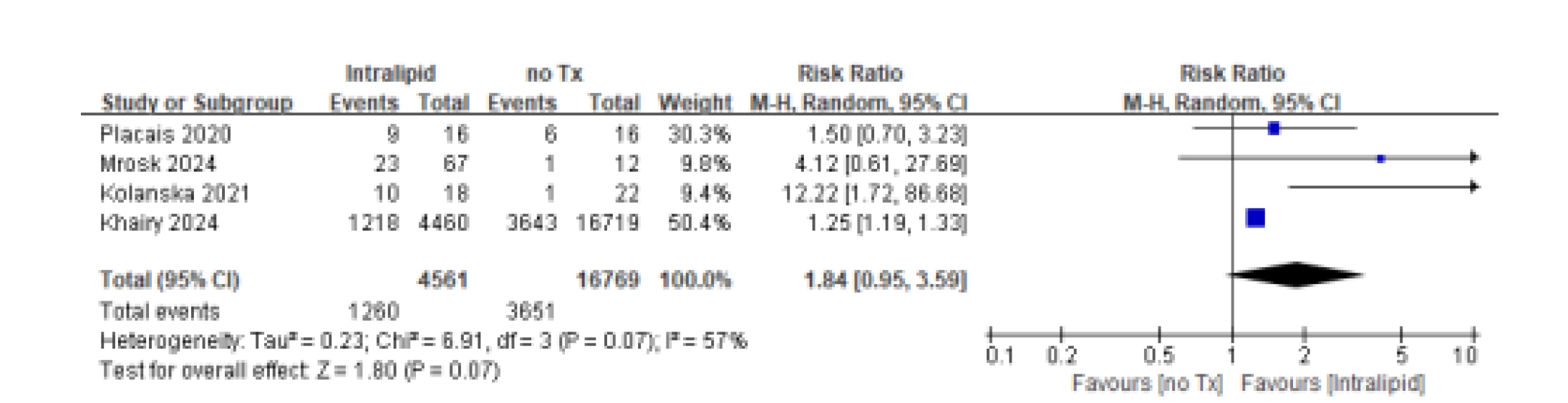
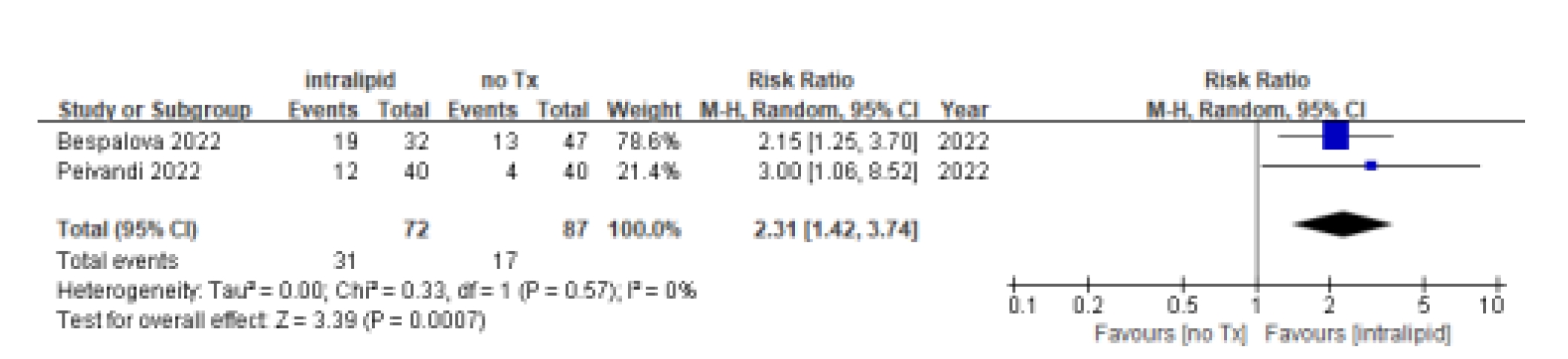
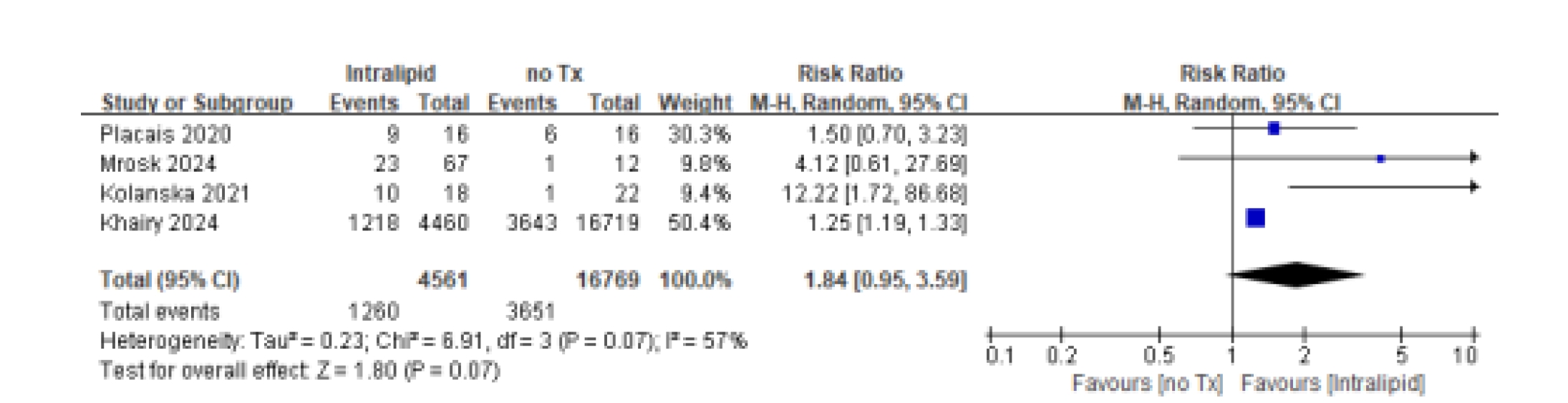
Two RCTs showed a statistically significant improvement in clinical pregnancy rate in the intralipid group compared with no treatment (RR 2.31, 95% CI 1.42–3.74; I² = 0%) (Fig. 3). In contrast, pooled results from four NRCSs did not show a statistically significant difference in clinical pregnancy rate (RR 1.84, 95% CI 0.95–3.59; I² = 57%) (Fig. 4). One NRCS [15] reported a statistically significant increase in miscarriage rate in the intralipid group (n = 20,315; RR 1.12, 95% CI 1.04–1.20). These results are summarized in Table 2.
In RCT-based subgroup analyses by patient group, the single study enrolling a mixed RIF and repeated IVF failure population showed a significantly higher clinical pregnancy rate (RR 2.15, 95% CI 1.25–3.70) [13]. In NRCS-based subgroup analyses, pooled results from two studies enrolling mixed RIF/RPL populations also showed a significantly higher live birth rate (RR 3.60, 95% CI 1.51–8.57; I² = 0%). Prespecified subgroup analyses by sample size and intralipid dose could not be performed due to an insufficient number of studies within each category or inconsistent reporting of dose information across studies (Supplementary Table S2).
Sensitivity analyses
Among RCTs restricted to RIF women, clinical pregnancy rate remained significantly higher in the intralipid group (1 RCT; RR 3.00, 95% CI 1.06–8.52). Among NRCSs restricted to RIF women, live birth rate was significantly higher (1 NRCS; RR 1.32, 95% CI 1.24–1.41), and miscarriage rate was also significantly higher (1 NRCS; RR 1.12, 95% CI 1.04–1.20), while clinical pregnancy rate was not significant (2 NRCSs; RR 1.29, 95% CI 0.64–2.61; I² = 81%). Among NRCSs using NK cell testing as a patient selection criterion [15,18], neither live birth rate (RR 1.79, 95% CI 0.49–6.47; I² = 35%) nor clinical pregnancy rate (RR 1.53, 95% CI 0.64–3.65; I² = 33%) showed significant differences. In the single NRCS rated as low risk of bias [16], clinical pregnancy rate showed a large and significant effect (RR 12.22, 95% CI 1.72–86.68). Although the adjusted estimate for clinical pregnancy rate from the single study reporting adjusted results (Kolanska 2021; adjusted OR 36.04, 95% CI 2.26–575.18) nominally favored intralipid, the confidence interval was extremely wide, rendering this estimate highly imprecise and unreliable. Overall, findings were consistent with the main analyses and did not alter their interpretation: effect estimates from single-study analyses were imprecise, and the one available adjusted estimate carried an extremely wide confidence interval, limiting its reliability (Supplementary Table S2).
Effectiveness: intralipid versus IVIG or steroids
When compared with other immunomodulatory treatments, intralipid demonstrated no significant advantage over either IVIG or steroids. In one RCT [11] (n = 154) comparing intralipid with IVIG, no significant differences were observed in live birth rate (RR 0.83, 95% CI 0.63–1.10), clinical pregnancy rate (RR 1.07, 95% CI 0.96–1.20), or miscarriage rate (RR 0.63, 95% CI 0.28–1.44). Similarly, pooled analysis of two NRSs (n = 185) comparing intralipid with steroid-based treatment (prednisolone or steroids) revealed no statistically significant differences in live birth rate (Martini et al; RR 0.93, 95% CI 0.52–1.66) or clinical pregnancy rate (Martini et al and Kolanska et al; RR 0.84, 95% CI 0.57–1.24; I² = 33%) (Supplementary Table S3).
GRADE certainty of evidence
For the comparison of intralipid versus no treatment, the certainty of evidence was “low” for clinical pregnancy rate based on RCT data (downgraded for risk of bias and imprecision), and “very low” for live birth rate (Table 2), clinical pregnancy rate from NRCSs, and miscarriage rate. For comparisons with IVIG and steroids, all outcomes were rated “very low” due to risk of bias and imprecision (Supplementary Table S3).
Safety findings
Safety data were available from 4 RCTs [11,13,19,20], 2 NRCSs [21,22], and 5 case studies [23-27].
Of the RCTs, no adverse events were reported in the intralipid group in three studies [11,13,19]; comparator: no treatment or IVIG), while one study reported congenital external ear malformation in two cases receiving intralipid [20]. In the control groups, no adverse events were reported except in one RCT comparing intralipid with IVIG, in which mild fever (n = 5) and headache (n = 2) occurred in the IVIG group [11].
Among the two NRCSs, findings were contrasting. No adverse events were reported in the study comparing intralipid with no treatment [21]. In contrast, the study comparing intralipid with low molecular weight heparin (LMWH) reported obstetric complications in the intralipid group, including pre-eclampsia (n = 1), intrauterine growth restriction (n = 1), and placental abruption (n = 1), although none were classified as serious adverse events; no serious adverse events were reported in the LMWH group [22].
Of the five case studies and case series, no adverse events were reported in four reports [23,24,26,27]. One report, involving patients with elevated NK cell levels treated with intralipid, described facial flushing with pre-seizure symptoms (n = 1) and asymmetric fetal intrauterine growth restriction (n = 1) [25]. Full details of reported cases are presented in Supplementary Table S4.
Discussion
This systematic review and meta-analysis evaluated the effectiveness and safety of intralipid infusion in women with RIF or RPL. Of the two randomized controlled trials comparing intralipid with no treatment in women with RIF or RPL, neither reported data on miscarriage rate. Nevertheless, pooled data from these two trials demonstrated a significantly higher clinical pregnancy rate in the intralipid group compared with the no-treatment group (RR 2.31, 95% CI 1.42–3.74; GRADE certainty: low); however, this effect was not observed in the pooled NRCS data. One large observational study additionally reported a significantly increased miscarriage rate in the intralipid group. When compared with other immunomodulatory treatments such as IVIG or steroids, no statistically significant differences were detected, although the estimates were imprecise and the certainty of evidence was very low. No severe or life-threatening adverse events directly attributable to intralipid were reported, although safety data were limited and incompletely ascertained. In a small number of studies, congenital anomalies, obstetric complications, and fetal growth restriction were reported in the intralipid group; however, a causal relationship with intralipid could not be established given the limited ascertainment and reporting of adverse events across studies. Long-term follow-up data on maternal and neonatal outcomes were also absent across all included studies.
Nevertheless, our findings are broadly consistent with prior systematic reviews, which have similarly concluded that the evidence is insufficient to support or refute the use of intralipid in women with RPL or RIF [6,28-31]. The present review differs from these prior reviews in several key respects, offering an updated and more rigorous synthesis of the current evidence First, this review incorporates recently published studies not included in earlier meta-analyses, while excluding studies whose findings can no longer be considered valid. Al-Zebeidi et al. [32], cited in five prior systematic reviews, and Dakhly et al. [33], cited in four prior systematic reviews, were excluded after confirming their retraction from peer-reviewed journals in September 2025 and May 2024, respectively, thereby reducing potential distortion of the pooled estimates. Second, we made explicit efforts to minimize clinical and methodological heterogeneity by analyzing effectiveness data separately by study design (RCT vs. NRCS) and by indication (RIF vs. RPL). This approach revealed discordant effect estimates between randomized and non-randomized evidence and highlighted the absence of RCT evidence in RPL-only populations. Despite the resulting reduction in per-analysis sample size, a potential treatment effect could still be discerned in several RCT-based analyses, even though the certainty of evidence remained low. Third, this review provides a more comprehensive assessment of safety by additionally incorporating case reports and conference abstracts, sources often excluded from prior systematic reviews, thereby capturing a broader range of real-world safety signals than previously reported.
The biological rationale for intralipid in fertility treatment rests primarily on its proposed ability to suppress peripheral and uterine NK cell activity, thereby improving the immune tolerance required for embryo implantation. However, the clinical evidence for NK cell-guided patient selection remains weak. In our sensitivity analyses restricted to studies using NK cell testing as a selection criterion, no significant benefit was demonstrated for either live birth or clinical pregnancy rate. Furthermore, the two included studies differed in the type of NK cell testing used as the selection criterion: one assessed peripheral blood NK cell proportion and activity [15], while the other assessed uterine NK cell density measured immunohistochemically in endometrial biopsy specimens [18]. Given that peripheral and uterine NK cell measurements reflect distinct compartments and lack a validated correlation with each other, this heterogeneity in testing modality, in addition to differing definitions of NK cell abnormality across studies, further limits the interpretability of these findings.
This review has several limitations. First, the certainty of evidence was very low to low across all outcomes, primarily due to risk of bias in the primary studies, substantial heterogeneity, and imprecision. Well-designed and rigorously conducted clinical trials are needed to establish the clinical effectiveness of intralipid infusion therapy. Second, most included studies were small and conducted at single centers in limited geographic settings (Europe, Middle East, East Asia); no studies were conducted in Korean patients, despite widespread empirical use of intralipid in South Korea. Third, although this review's inclusion of conference abstracts and case reports broadened the safety evidence base, these sources inherently lack the methodological rigor of peer-reviewed studies, restricting quantitative synthesis and precluding firm conclusions regarding the safety profile of intralipid. Further well-designed studies with systematic safety reporting are needed to determine whether the observed adverse findings, including congenital anomalies and obstetric complications, reflect a true potential harm associated with intralipid or occurred independently of treatment. Fourth, publication bias was not formally assessed due to the small number of eligible studies. Finally, this review did not fully differentiate treatment effects according to the underlying indication; in particular, whether the effectiveness of intralipid differs between women with RIF, the primary indication for its use, and those with RPL remains to be clarified. Future studies stratified by indication are warranted to determine whether specific subgroups derive greater benefit from intralipid therapy.
In conclusion, current evidence is insufficient to support the clinical safety and effectiveness of intralipid infusion therapy in women with RIF or RPL. Given these gaps, intralipid should not be used indiscriminately as a routine empirical treatment outside the context of well-designed clinical trials. Future research should prioritize adequately powered RCTs with standardized treatment protocols—including defined dose, timing, and indication-specific patient selection criteria—using live birth rate as the primary endpoint, together with systematic long-term safety monitoring for both mother and offspring.
No potential conflict of interest relevant to this article was reported.
Funding
This study was supported by the National Evidence-based Healthcare Collaborating Agency (NECA), Republic of Korea (project number: NECA-A-25-009). The funders had no role in study design, data collection, data analysis, data interpretation, or writing of the report.
Data Availability Statement
The datasets generated and/or analyzed in the current study are available from the corresponding author on reasonable request.
Ethics Approval and Consent to Participate
Not applicable.
Authors' Contributions
Conception and design: DAP, BHY. Administrative support: JYC, HIL. Provision of study materials: JEP, JYC, DAP. Collection and assembly of data: JEP, JYC, HIL. Data analysis and interpretation: JEP, DAP, BHY. Manuscript writing: JEP, DAP, BHY. Final approval of manuscript: All authors.
Acknowledgments
The authors would like to express their sincere gratitude to Prof. Joon Cheol Park, Prof. Aera Han, and Prof. Seul Ki Kim for their valuable clinical advice and expert consultation throughout this study.
Disclosure of AI use
In preparing this manuscript, the authors used Claude Sonnet 4.6 (Anthropic, San Francisco, CA, USA) to assist with Korean–English translation and editorial refinement of the text. All AI-generated content was critically reviewed, revised, and verified by the authors, who take full responsibility for the accuracy and integrity of the work.
Fig. 1.
PRISMA flow diagram of study selection.
Fig. 2.
Forest plot of live birth rate (intralipid vs. no treatment, NRCS).
Fig. 3.
Forest plot of clinical pregnancy rate (intralipid vs. no treatment, RCT).
Fig. 4.
Forest plot of clinical pregnancy rate (intralipid vs. no treatment, NRCS).
Table 1.
Characteristics of Intralipid Infusion Regimens Across Included Studies
CI, confidence interval; GRADE, Grading of Recommendations Assessment, Development and Evaluation; NRCS, non-randomized comparative studies; RCT, randomized controlled trial; RR, risk ratio.
aDowngraded by 1 level for risk of bias, owing to limitations in domains such as comparability of groups and selection of participants.
bDowngraded by 2 levels for imprecision, as the confidence interval crosses both no effect and appreciable benefit.
cDowngraded by 1 level for risk of bias, owing to serious concerns in 2 or more domains (e.g., the randomization process and deviations from intended interventions).
dDowngraded by 1 level for imprecision, as the optimal information size (OIS) was not met (48 events).
References
1. Health Insurance Review and Assessment Service (HIRA). National health insurance statistics on infertility treatment procedures (assisted reproductive technology) [Internet]. Wonju: HIRA; 2025 [cited 2025 Dec 5]. Available from https://opendata.hira.or.kr/op/opc/olapMfrnIntrsIlnsInfoTab1.do
2. Coulam CB, Roussev RG. Correlation of NK cell activation and inhibition markers with NK cytoxicity among women experiencing immunologic implantation failure after in vitro fertilization and embryo transfer. J Assist Reprod Genet 2003; 20: 58-62.
3. Beaman KD, Ntrivalas E, Mallers TM, Jaiswal MK, Kwak-Kim J, Gilman-Sachs A. Immune etiology of recurrent pregnancy loss and its diagnosis. Am J Reprod Immunol 2012; 67: 319-25.
5. Check JH, Check D. Intravenous intralipid therapy is not beneficial in having a live delivery in women aged 40-42 years with a previous history of miscarriage or failure to conceive despite embryo transfer undergoing in vitro fertilization-embryo transfer. Clin Exp Obstet Gynecol 2016; 43: 14-5.
8. Page MJ, McKenzie JE, Bossuyt PM, Boutron I, Hoffmann TC, Mulrow CD, et al. The PRISMA 2020 statement: an updated guideline for reporting systematic reviews. BMJ 2021; 372: n71.
10. Guyatt GH, Oxman AD, Vist GE, Kunz R, Falck-Ytter Y, Alonso-Coello P, et al. GRADE: an emerging consensus on rating quality of evidence and strength of recommendations. BMJ 2008; 336: 924-6.
11. Meng L, Lin J, Chen L, Wang Z, Liu M, Liu Y, et al. Effectiveness and potential mechanisms of intralipid in treating unexplained recurrent spontaneous abortion. Arch Gynecol Obstet 2016; 294: 29-39.
12. Bespalova ON, Zhernakova TS, Selkov SA, Chepanov SV. Efficiency of intravenous therapy with Intralipid fat emulsion in patients with early reproductive loss. J Obstet Womens Dis 2022; 71: 21-8.
13. Peivandi S, Mortazavi L, Gordani N, Zamaniyan M, Asgarian-Omran H, Ajami A, et al. Effect of intralipid infusion on pregnancy outcome in infertile women with history of implantation failure: a single blind randomized clinical trial. J Mazandaran Univ Med Sci 2022; 32: 16-26.
14. Martini AE, Jasulaitis S, Fogg LF, Uhler ML, Hirshfeld-Cytron JE. Evaluating the utility of intralipid infusion to improve live birth rates in patients with recurrent pregnancy loss or recurrent implantation failure. J Hum Reprod Sci 2018; 11: 261-8.
15. Khairy M, Harb H, Eapen A, Melo P, Kazem R, Rajkhowa M, et al. The use of immunomodulation therapy in women with recurrent implantation failure undergoing assisted conception: a multicentre cohort study. Am J Reprod Immunol 2024; 91: e13819.
18. Mrosk P, Sandi-Monroy N, Gagsteiger F, Friedl TWP, Hancke K, Bundschu K. Endometrial scratching and intralipid treatment—no general recommendations. Front Reprod Health 2024; 6: 1505842.
19. Dogra Y, Singh N, Mathur S. Intralipid supplementation in women with unexplained recurrent implantation failure and elevated uterine natural killer cell levels—a randomized placebo controlled trial. Hum Reprod 2021; 29 Suppl 1: 307.
20. Gamaleldin I, Gomaa M, Shafik A, Akande V. Intralipid infusion does not improve live birth rates in women with unexplained recurrent implantation failure and may increase the risk of congenital malformations, a double-blinded randomised controlled trial. BJOG 2018; 125 Suppl 1: 31-2.
21. Rogenhofer N, Mahner S, von Hasselbach YL, Thaler CJ. Effects of intralipid infusions on anti-trophoblast antibody (ATAb)-activities in patients with recurrent pregnancy loss: an observational report. Am J Reprod Immunol 2022; 87: e13506.
22. Kumar P, Mahajan PMM. Estimation of peripheral NK cells (pNK) and role of intralipid and heparin in early recurrent pregnancy losses (RPL) – a pilot study. J Assist Reprod Genet 2016; 33: 1693-708.
23. Anya OC, Ajayi ER, Solanke HR, Ohanaka AI, Ubana KD, Ajayi E, et al. The use of intralipid infusions in the prevention of embryo implantation failure. Cureus 2024; 16: e53368.
24. Manning R, Irving L, Evbuomwan I. Add-on or take away: a retrospective review of managing women with recurrent implantation failure with intralipids during assisted reproductive cycles. BJOG 2019; 126 Suppl 1: 203.
25. Ehrlich R, Sarah G. A retrospective observational study of intralipid immunotherapy for women with reproductive failure. J Assist Reprod Genet 2016; 33: 1693-708.
26. Kaul V, Lolatgis N, Osianlis T, Sorby K, Vollenhoven B. The use of intralipid in IVF cycles in poor responders with repeated implantation failure who were positive for natural killer (NK) cells. Hum Reprod 2014; 29 Suppl 1: 128.
27. Holschbach V, Kuon R, Goeggl T, Daniel V, Weber M, Markert U, et al. Intravenous lipid administration in RPL and RIF patients with elevated uterine natural killer cells. Hum Reprod 2014; 29 Suppl 1: 140.
28. Marchand GJ, Masoud AT, Ulibarri H, Arroyo A, Coriell C, Goetz S, et al. Effect of a 20% intravenous fat emulsion therapy on pregnancy outcomes in women with RPL or RIF undergoing IVF/ICSI: a systematic review and meta-analysis. J Clin Transl Res 2023; 9: 236-45.
29. Zhou P, Wu H, Lin X, Wang S, Zhang S. The effect of intralipid on pregnancy outcomes in women with previous implantation failure in in vitro fertilization/intracytoplasmic sperm injection cycles: a systematic review and meta-analysis. Eur J Obstet Gynecol Reprod Biol 2020; 252: 187-92.
30. Rimmer MP, Black N, Keay S, Quenby S, Al Wattar BH. Intralipid infusion at time of embryo transfer in women with history of recurrent implantation failure: a systematic review and meta-analysis. J Obstet Gynaecol Res 2021; 47: 2149-56.
31. Han EJ, Lee HN, Kim MK, Lyu SW, Lee WS. Efficacy of intralipid administration to improve in vitro fertilization outcomes: a systematic review and meta-analysis. Clin Exp Reprod Med 2021; 48: 203-10.
32. Al-Zebeidi J, Agdi M, Lary S, Al-Obaid S, Salim G, Al-Jaroudi D. Effect of empiric intravenous intralipid therapy on pregnancy outcome in women with unexplained recurrent implantation failure undergoing intracytoplasmic sperm injection-embryo transfer cycle: a randomized controlled trial. Gynecol Endocrinol 2020; 36: 131-4.
33. Dakhly DM, Bayoumi YA, Sharkawy M, Gad Allah SH, Hassan MA, Gouda HM, et al. Intralipid supplementation in women with recurrent spontaneous abortion and elevated levels of natural killer cells. Int J Gynaecol Obstet 2016; 135: 324-7.
Effectiveness and safety of intravenous lipid emulsion in women with recurrent pregnancy loss or recurrent implantation failure: a systematic review and meta-analysis
Fig. 1. PRISMA flow diagram of study selection.
Fig. 2. Forest plot of live birth rate (intralipid vs. no treatment, NRCS).
Fig. 3. Forest plot of clinical pregnancy rate (intralipid vs. no treatment, RCT).
Fig. 4. Forest plot of clinical pregnancy rate (intralipid vs. no treatment, NRCS).
Fig. 1.
Fig. 2.
Fig. 3.
Fig. 4.
Effectiveness and safety of intravenous lipid emulsion in women with recurrent pregnancy loss or recurrent implantation failure: a systematic review and meta-analysis
Table 2. GRADE Summary of Findings: Intralipid Infusion versus No Treatment
Statistically significant (P < 0.05).
CI, confidence interval; GRADE, Grading of Recommendations Assessment, Development and Evaluation; NRCS, non-randomized comparative studies; RCT, randomized controlled trial; RR, risk ratio.
Downgraded by 1 level for risk of bias, owing to limitations in domains such as comparability of groups and selection of participants.
Downgraded by 2 levels for imprecision, as the confidence interval crosses both no effect and appreciable benefit.
Downgraded by 1 level for risk of bias, owing to serious concerns in 2 or more domains (e.g., the randomization process and deviations from intended interventions).
Downgraded by 1 level for imprecision, as the optimal information size (OIS) was not met (48 events).