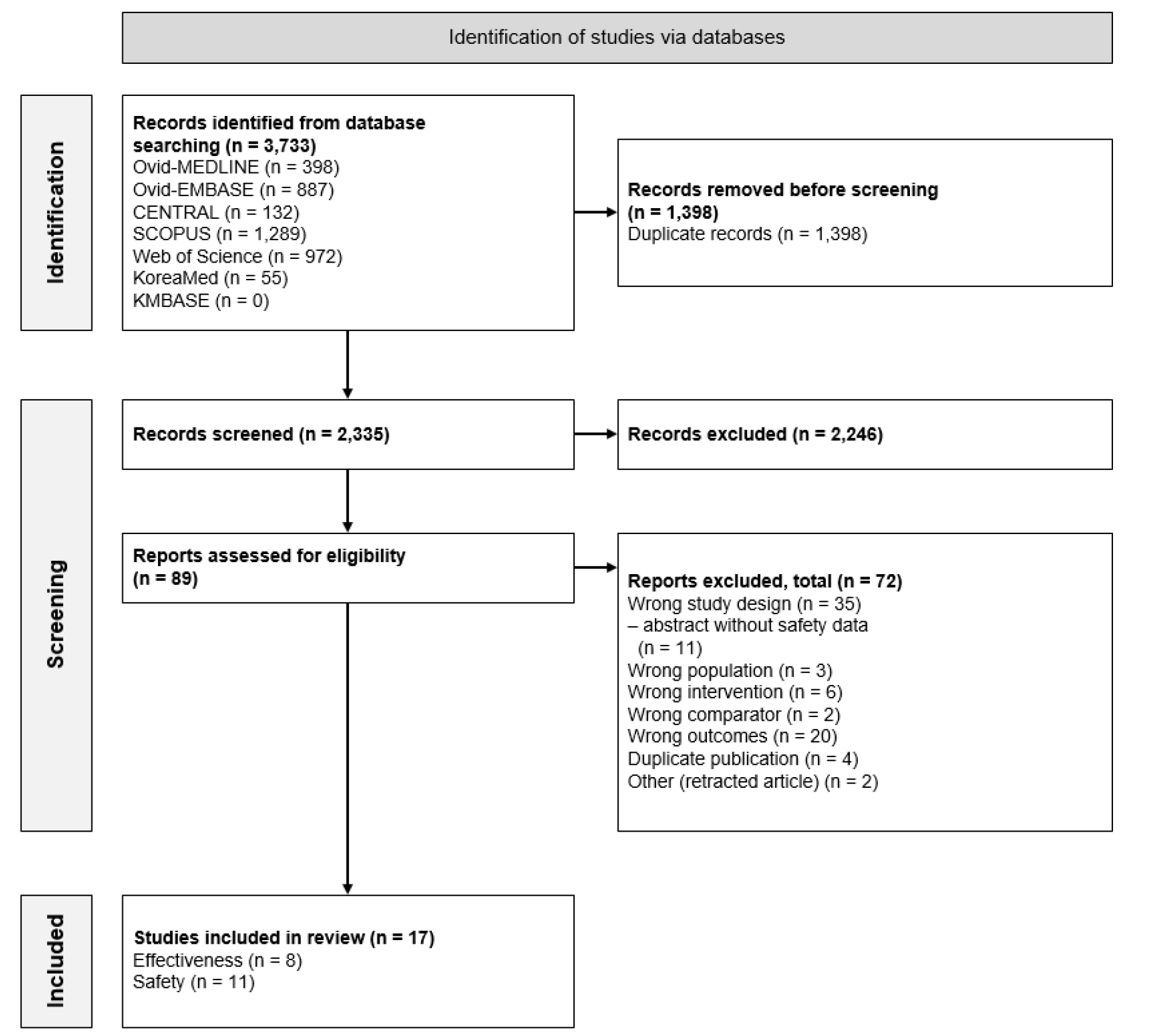
Intravenous intralipid is widely used for women with recurrent reproductive failure —including recurrent pregnancy loss (RPL), recurrent implantation failure (RIF), and repeated IVF failure—despite limited evidence. This systematic review evaluated the effectiveness and safety of intralipid infusion in this population. We searched seven electronic databases from inception to April 14, 2025. RCTs and non-randomized comparative studies (NRCSs) were included for effectiveness analysis; case series and reports for safety. Two reviewers independently screened and extracted data. Risk of bias was assessed using RoB 2.0 and RoBANS 2.0. Meta-analyses used a random-effects model (risk ratios [RR] with 95% CI). Evidence certainty was assessed using GRADE. Seventeen studies were included (8 effectiveness, 11 safety). Pooled RCT data showed intralipid significantly improved clinical pregnancy rate vs. no treatment (RR 2.31, 95% CI 1.42–3.74; I² = 0%; GRADE certainty: low); this effect was not observed in the pooled NRS data for live birth rate or clinical pregnancy rate, and one large NRCS reported a significantly higher miscarriage rate in the intralipid group (RR 1.12, 95% CI 1.04–1.20). No significant differences were observed vs. IVIG or steroids. Serious adverse events were rare. GRADE certainty was very low to low across all outcomes. Current evidence does not support the routine use of intralipid in women with recurrent reproductive failure. While pooled RCT data suggest a potential benefit in clinical pregnancy rate, evidence certainty is low, and this benefit was not observed in the pooled NRS data. Adequately powered RCTs with standardized protocols and live birth rate as the primary endpoint are needed.



 First
First Prev
Prev